


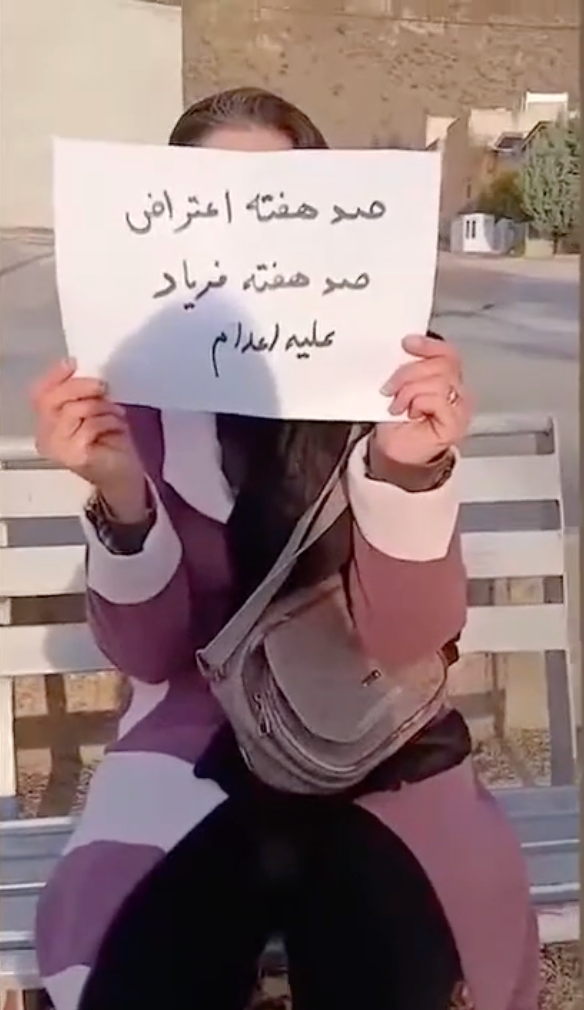
Yet the Islamic Republic of Iran is getting a pass from many otherwise progressive voices in the world, because of the monstrous Israeli-US genocide in Gaza. Some justify it by saying, “Iran supports the Palestinians.” But those who say this have lost their own humanity and morality in the untenable illogic of “the enemy of my enemy is my friend.” Even more outrageously, this spits in the face of the Woman, Life, Freedom uprising and the brave anti-execution striking prisoners. We call on all justice-seeking people to stand with the political and striking prisoners in Iran, and with their supporters.
The IEC salutes the hunger striking prisoners and their persistent battle for justice, dignity, and humanity, now involving 55 prisons across Iran, joined by ever more imprisoned men and women. Their heroism and tenacity, facing down a fascist regime against all odds, is an example to learn from, amplify, and follow. To honor and promote this significant struggle, the IEC is tentatively planning to mark the 2-year anniversary, a nodal point, of this struggle with a vigil on the morning of Wednesday January 28, 2026, in partnership with the First Unitarian Universalist Society of San Francisco (UUSF) Human Rights and Global Conversations working groups. That evening the UUSF may also host a film showing of the Frontline documentary “Inside the Iranian Uprising”. Stay tuned for details on IEC and UUSF websites.
We conclude with the words from an insightful essay by renowned author Sahar Delijani titled, “The View from Evin.” She points to the real lesson of the “shared assault” – that of the Iran regime’s brutality towards the prisoners after the Israeli bombing of Evin Prison in June 2025:
It should come as no surprise that the locus of this shared assault was Evin. The prison, filled with generations of dissidents, contains—and attempts to extinguish—a story that defies the one upheld by dictatorship and empire alike. Its crowded cells speak not of masses cowed into submission or awaiting salvation, but of a people fiercely committed to their own liberation. Contrary to the isolation these oppressive orders seek to impose, those who reject the imposition of such violent enclosures—from Kurdistan to Iran to Palestine—draw the lines of a different map pointing the way toward a future where not only the prisons, but the very orders that sustain them, will burn.
The 100th week of the multi-prison hunger strike is an affirmation of this commitment to liberation.